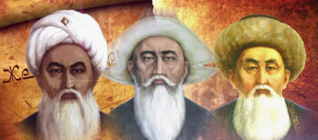
Oratory art
The art of oratory is a vivid example of eloquence, ingenuity that has come from very early times. It was in different nations and times. The general history of oratory is connected with ancient Greek philosophers and orators. Ancient Greek thinkers Socrates, Plato, Democritus. Demosthenes, Anacharis, Plutarch, Cicero wrote extensively about the art of oratory in their philosophical and aesthetic treatises. They confused it with the term “rhetoric”. Greek thinkers considered the logical connection between a quick thought of a person and a quick word. They were one of the first to say that words are the direct reality of thoughts. They analyzed the relationship between thoughts and words in depth, differentiated the problem of artistic thought and artistic language from an aesthetic point of view. They considered eloquence to be genius and associated its ultimate essence with knowledge. However, it is not possible for everyone to be able to speak rationally. “The long history of nomads, going back thousands of years, has formed sages of the steppe. Indigenous nomads, who grew up with nature and accepted the secrets of things and phenomena, the general existence in their own way, were the first to speak. They paid special attention to language in human nature. Theyunderstood the magic secret of the word. In connection with this, there are many proverbs and sayings in Kazakh. Proverbs of the Kazakh people, all the winged words are a vivid example of the art of oratory. Phraseological idioms in the rich vocabulary of the Kazakh language are also a clear manifestation of oratory. In such phrases, there is a pattern of concisely presenting the ideas expressed by comparing and contrasting them. For example: “ zhauyr atka kamshy auyr (a heavy whip for a heavy horse)”. In this phraseological usage, in general, it is hinted that a person who has few opportunities, is lazy, and has no condition, has difficulty in solving any problem, it is very painful for him. In such phrases, allusion prevails. In addition, the use of words from an alliterative-assonant point of view, as well as speaking by heart, will be a sign of eloquence.