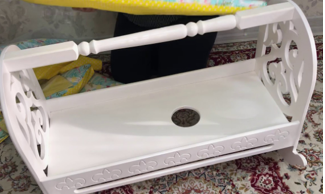
Tradition of making and using besik (cradle)
There are also traditions and customs related to national education, related to the way of life of our people, which have come from the past. One of them is the tradition of cradling the baby after birth. In a traditional environment, a baby is placed in a cradle with a cloth to ensure that the arms and legs are straight and for normal growth. The cradle is used by the vast majority of peoples living in Central Asia and the Caucasus, India, and China. Besik has been spread among the nomadic Kazakh people since ancient times. Kazakh cradles are made of pine, birch, and mostly willow. Such a cradle will be light, compact and durable, convenient to move. The cradle is very suitable for the cleanliness of the child, because the specially installed tubek and shumekmaintain a baby’s hygiene. Ashesis placed at the bottom of tubek and changed frequently. Shumek is made from sheep's bone, sometimes it is boiled in milk to make it especially white. Because the legs and chest of a baby in the cradle are tied tightly, it has the opposite effect on his blood circulation system. Therefore, a baby is often released from the crib, moves his arms and legs, and performs special exercises.