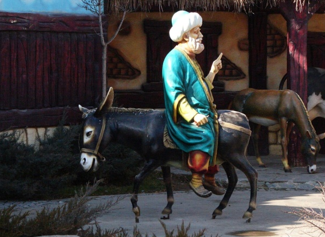
Satirical stories of Kozhanasyra
Ancient stories about Kozhanasyr, Aldar kose belong to the genre of legends of oral folk literature of Kazakhs.
Legends-tales by genre are close to folklore fairy tales, history, stories. It has a storyline connected with one person. At the same time, it tells about a specific historical person. It has no fairy tales in it. Only the era hints at the old times. The story-telling legends tell about real life events that happened in life. While the plot in fairy tales and historical songs is filled with a layer of actions, several images, in historical legends the story is narrated only about one event.
Depending on the thematic and substantive content, scholars categorise legends into different areas.
The main ones are: 1. historical legends. 2. toponymic legends. 3. mythological legends. 4. Zoomorphic legends. 5. religious legends. 6. Novellistic legends. The majority of legends spread in the Kazakh steppe refer to Prophet Muhamed, Azret Ali, Throne Suleiman, Kydyr Baba, Baluan Kyz Dariga, Madi. They are dominated by texts of religious character. Among the oldest Kazakh legends there are legends about Princess Tumar (Tomiris), Shyrak batyr, Anakarys. One of the legends says how Princess Tumar put the severed head of the Persian king Cyrus in a sack filled with blood with the words: "You wanted blood, so get drunk to your heart's content!".
At the origins of Kazakh legends are such personalities as Korkyt, Maiky bi, Aldar kose and a universal personality for all Turkic-speaking peoples Kozhanasyr. Some of the legends common among Kazakhs are connected with the name of Kozhanasyr. Kozhanasyr's real name is Khoja Nasreddin, who became a native hero among Kazakhs.
He was born and grew up on the territory of modern Turkey. According to Turkish scholars, he was born in Akshahar, where he worked as a teacher.
There he died and is buried. Academician V.A. Gordlevsky is of the same opinion.
Khoja Nasreddin was a man who lived approximately in the XIII century.
In 2022, “Humorous stories of Khoja Nasreddin,” jointly presented by Azerbaijan, Kazakhstan, Kyrgyzstan, Tajikistan, Turkey, Turkmenistan, and Uzbekistan, were inscribed by the decision of UNESCO on the Representative List of the Intangible Cultural Heritage (Rabat, Morocco, 28 November – 3 December 2022).