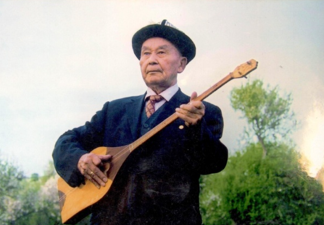
Art of performing kui on dombra and the Kazakh kui schools
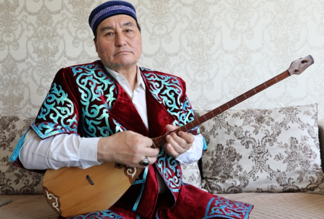 Inscribed on the UNESCO Representative List in 2014 The dombra kui is one of the intangible values of mankind. The dombra is a sacred instrument that preserves melodious tunes in its body, carrying the history of our people, their present, character, and emotions, as well as their future, intertwined like a single root. According to archaeological research, the ancient dombra originated in ancient Turkic times. The place of origin of the dombra is the golden cradle of the Turkic peoples - Altai Mountain. The construction of the dombra: head, neck, shanak (body), ishik (strings), kakpak (dombra deck), etc. In traditional Kazakh music dombra kuis are widespread. Kazakh dombra kuis are divided into tokpe and shertpe depending on the performing features, structure of cues.
In 2018, by the decision of the First President of the Republic of Kazakhstan N.A. Nazarbayev, the first Sunday of July was declared a holiday “Day of the dombra”. Since then, the Day of the dombra has been traditionally celebrated every year.
On November 26, 2014, by the decision of the United Nations Educational, Scientific and Cultural Organization (UNESCO), it was included in the intangible cultural heritage of humanity’s golden fund (Paris, France, 24–28 November 2014).
Inscribed on the UNESCO Representative List in 2014 The dombra kui is one of the intangible values of mankind. The dombra is a sacred instrument that preserves melodious tunes in its body, carrying the history of our people, their present, character, and emotions, as well as their future, intertwined like a single root. According to archaeological research, the ancient dombra originated in ancient Turkic times. The place of origin of the dombra is the golden cradle of the Turkic peoples - Altai Mountain. The construction of the dombra: head, neck, shanak (body), ishik (strings), kakpak (dombra deck), etc. In traditional Kazakh music dombra kuis are widespread. Kazakh dombra kuis are divided into tokpe and shertpe depending on the performing features, structure of cues.
In 2018, by the decision of the First President of the Republic of Kazakhstan N.A. Nazarbayev, the first Sunday of July was declared a holiday “Day of the dombra”. Since then, the Day of the dombra has been traditionally celebrated every year.
On November 26, 2014, by the decision of the United Nations Educational, Scientific and Cultural Organization (UNESCO), it was included in the intangible cultural heritage of humanity’s golden fund (Paris, France, 24–28 November 2014).