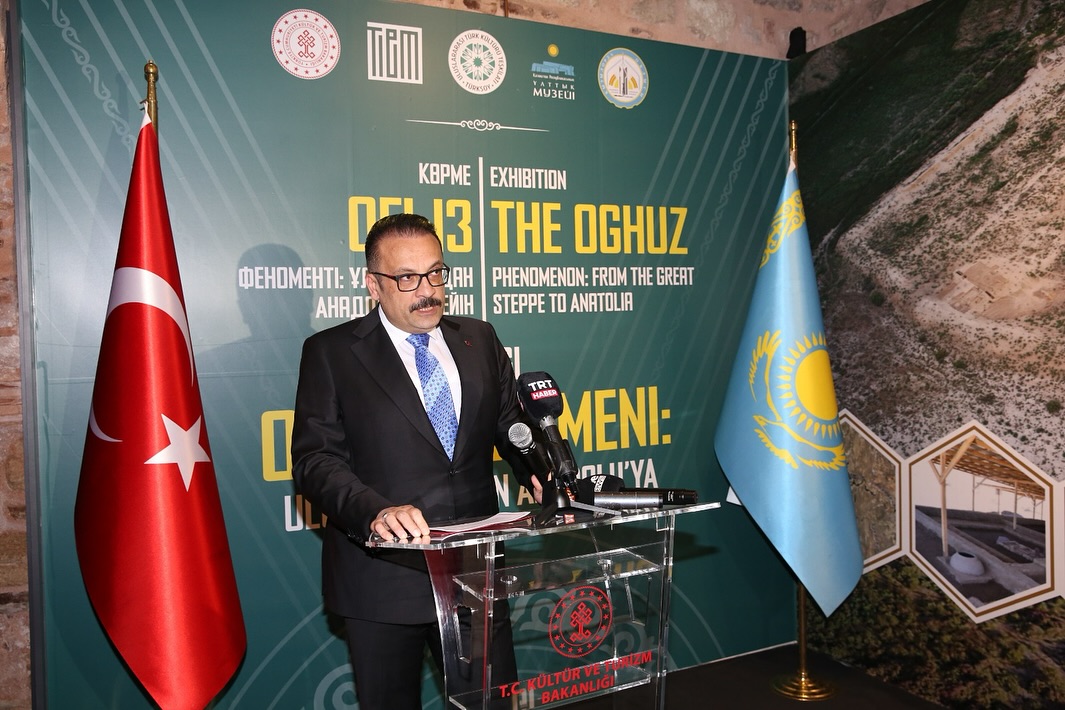
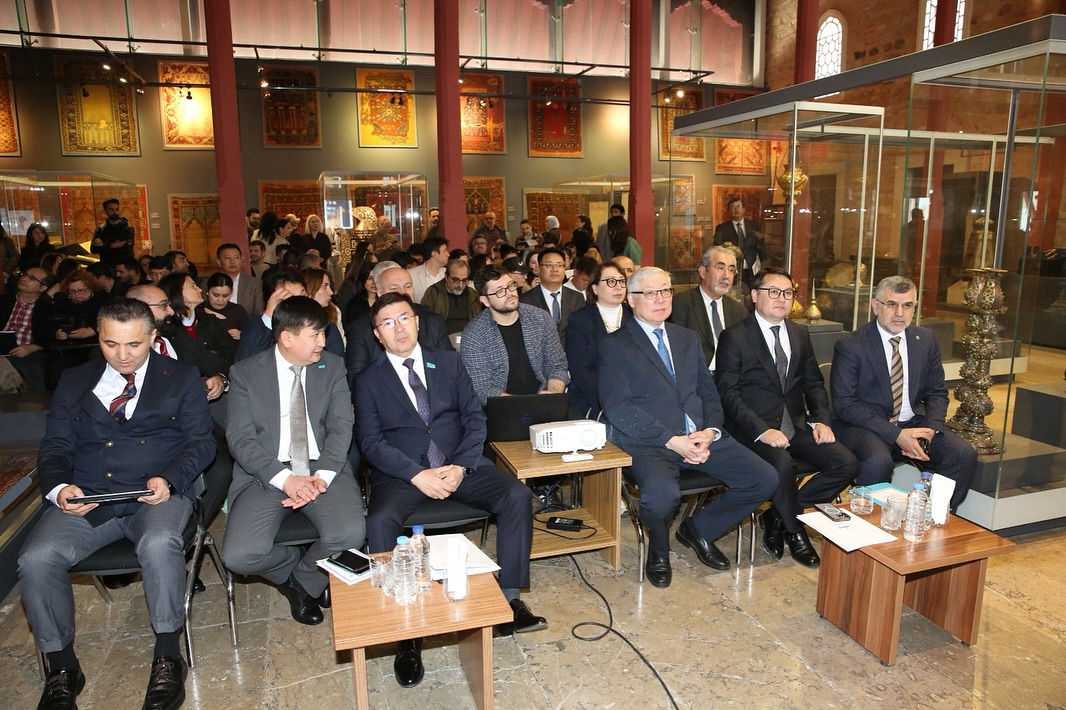
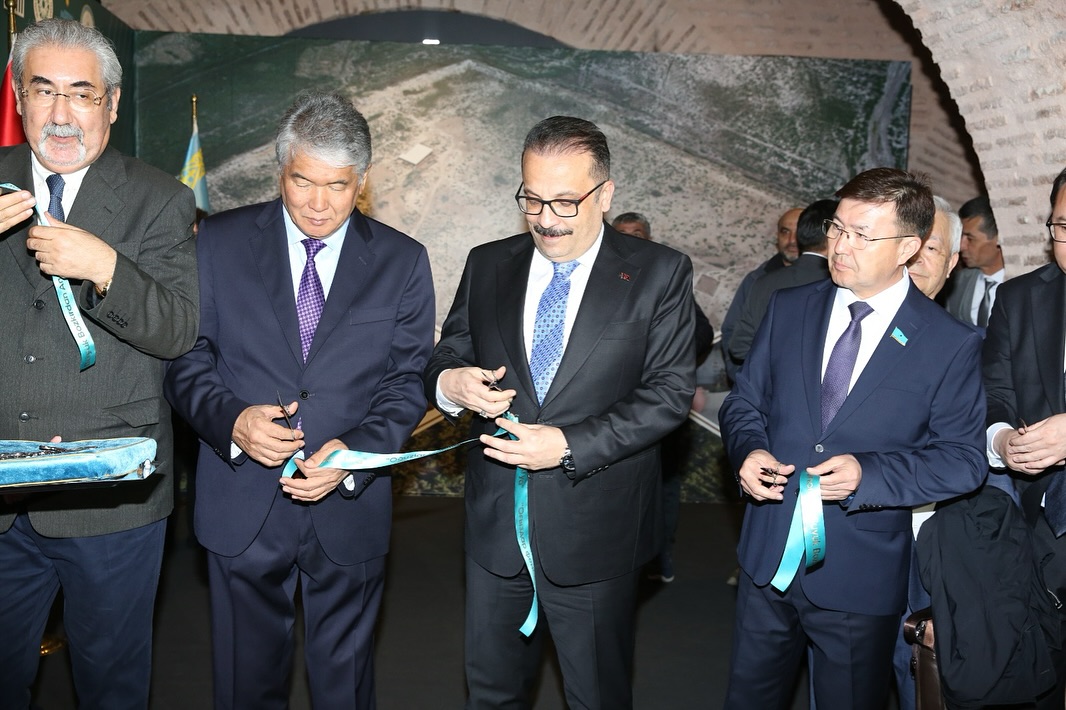
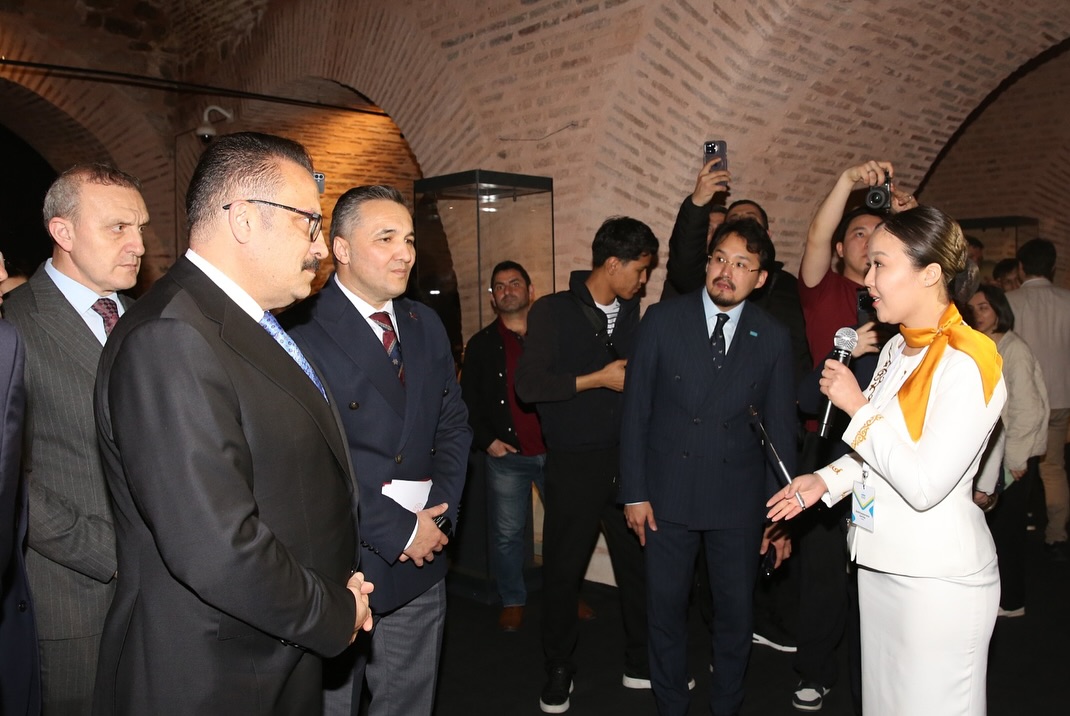
The international conference and large-scale exhibition titled «The Oghuz Phenomenon: From the Great Steppe to Anatolia» were held at a high level at the Museum of Turkish and Islamic Arts in Istanbul. This significant event highlighted the historical and cultural continuity between the Great Steppe and Anatolia and provided an opportunity to reassess the deep roots of Turkic civilization.
The event was organized with the support of the International Organization TURKSOY and the Akimat of the Kyzylorda Region, jointly by the National Museum of the Republic of Kazakhstan and the Kyzylorda Regional Museum of History and Local Lore.
The exhibition featured not only valuable exhibits from the National Museum of the Republic of Kazakhstan, but also unique artifacts from the collections of regional museums of Kyzylorda, Aktobe, and Atyrau, as well as items from Turkish museums related to the Anatolian period of the Oghuz. In total, the exhibition included 278 valuable objects, offering visitors a deeper insight into the rich historical heritage of Turkic peoples.
The opening ceremony was attended by Sultan Raev, Secretary General of TURKSOY; Ruslan Rustemov, Deputy of the Senate of the Parliament of the Republic of Kazakhstan; Amankul Nuriddinov, Consul General of Kazakhstan in Istanbul; Birol Incegikoz, Director of a Department at the Ministry of Culture and Tourism of Turkey; and Berik Abdygaliuly, Director of the National Museum of Kazakhstan.
During the plenary session, scholars comprehensively examined the origins and historical role of the Oghuz tribes and analyzed their contribution to modern Turkic civilization. Presentations were delivered on archaeological research in Anatolia, as well as on the urbanization processes of medieval cities such as Jankent and other settlements in the lower Syr Darya region. New archaeological data were introduced, modern museum practices were discussed, and an active academic exchange took place.
The exhibition showcased rare and valuable archaeological artifacts from the Oghuz period, promoting the shared historical and cultural heritage of Turkic peoples. The exhibition will be open to visitors until the end of June.