A large Bronze Age settlement is currently being excavated in the Imantau area of North Kazakhstan Region. A joint international archaeological expedition involving scientists fr om Kazakhstan and China is uncovering new evidence about the daily life, economy, and livelihoods of people who lived in the region in ancient times.
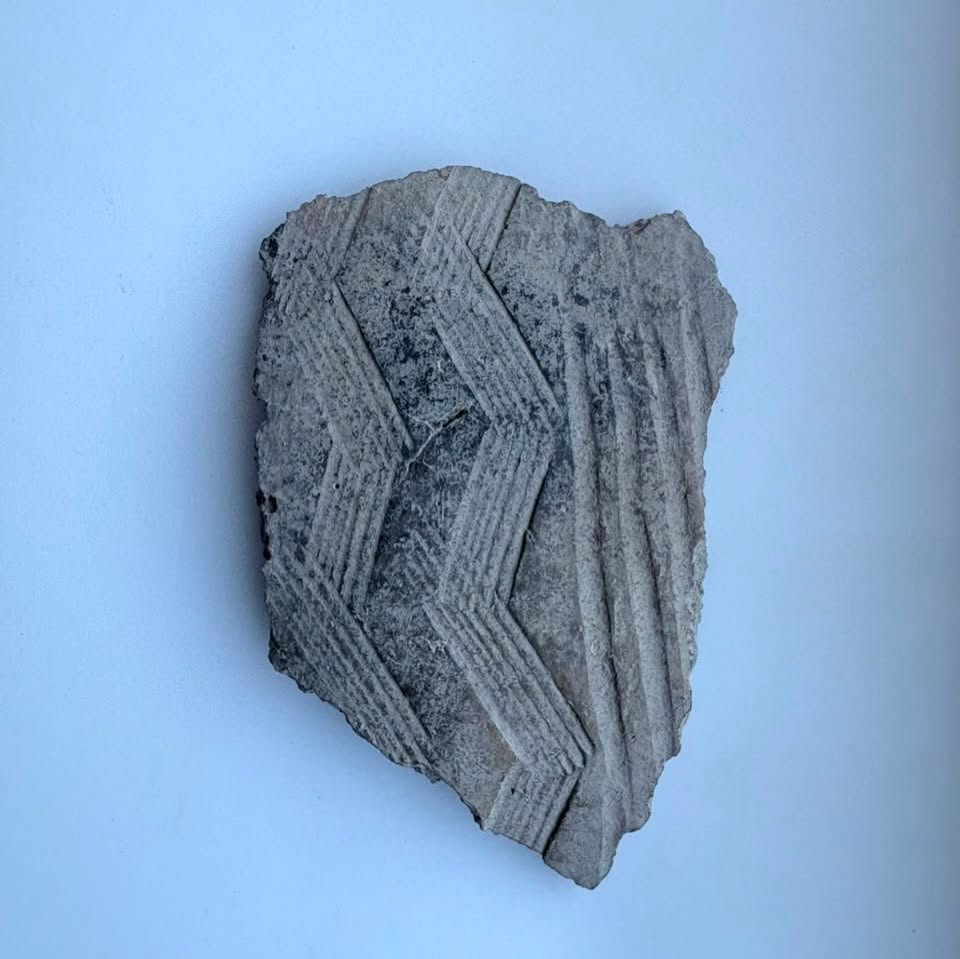
The fieldwork began on July 14 and will continue until August 17. Archaeologists are currently conducting excavations across an area of 324 square meters. The research has yielded fragments of Bronze Age pottery, stone tools, animal bones, bone appliqués, arrowheads, awls, bronze artifacts, and ore-processing remains associated with metalworking.
According to Berik Abdygaliev, Director of the National Museum of the Republic of Kazakhstan, the Imantau expedition is the first joint Kazakh-Chinese archaeological project carried out in cooperation with the National Museum of China. The five-year research program is focused on studying archaeological sites dating fr om the Bronze Age and Early Iron Age.
«International projects of this kind are of great importance. Chinese specialists, in particular, have advanced technological and laboratory capabilities. Their laboratories can help determine the composition and age of soil, ash, bones, and metal artifacts», – said Berik Abdygaliev.
The initial excavation results indicate that the Imantau settlement was a permanent and relatively large habitation during the Bronze Age. The artifacts discovered so far suggest that its inhabitants engaged in metalworking and maintained a complex economic system.
According to Zhang Xiaolei, a senior researcher at the Institute of Archaeology of the National Museum of China, the expedition’s initial findings have been encouraging.
«The discovery of large quantities of horse bones, as well as the remains of other domestic animals, indicates that livestock herding was well established in this area. For researchers, studying the period when Bronze Age cultures emerged and developed across the Eurasian Steppe is particularly important», – said Zhang Xiaolei.
Daniyar Duisenbai, the expedition leader, archaeologist, and head of a department at the Institute for Scientific Research of Cultural Heritage of the National Museum of the Republic of Kazakhstan, said that the artifacts discovered so far provide evidence that the Imantau settlement was a permanent habitation supported by a complex economic system.
At the same time, specialists hypothesize that the settlement may have belonged to a socially and economically prominent group. This assumption is partly based on evidence suggesting that the residential structure may have consisted of several layers or levels.
The expedition involves four specialists fr om China and more than 20 archaeologists and researchers from different regions of Kazakhstan. Students are also taking part in the fieldwork. For young specialists, the expedition provides an important scientific environment wh ere they can gain hands-on experience by directly participating in archaeological excavations.
According to the archaeologists, the significance of the Imantau settlement extends beyond the artifacts discovered there. The region is home to archaeological sites of global scientific importance, including the Botai settlement. International expeditions of this kind provide an opportunity to conduct systematic scientific research on historical sites in Kazakhstan that have yet to be fully explored.
In the coming stages, archaeologists plan to expand the excavation area and determine the full structure of the residential complex. As the research continues, scientists expect to uncover further evidence shedding light on the history of the settlement, as well as the daily life, livelihoods, and economic system of its ancient inhabitants.