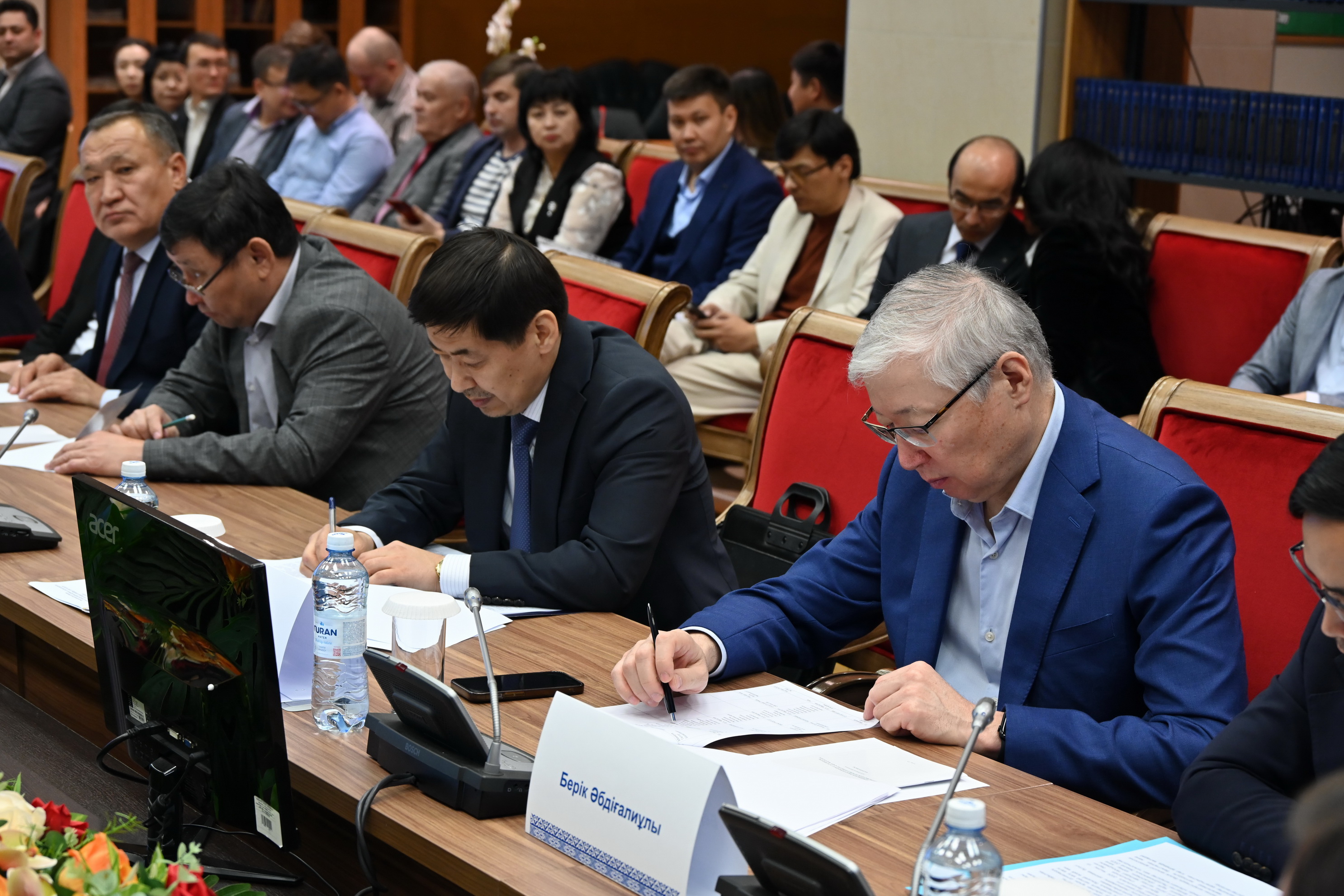
A roundtable discussion was held at the National Museum of the Republic of Kazakhstan, focusing on legislative changes in the field of protection of historical and cultural heritage sites and issues related to their implementation. Participants discussed improving the quality of archaeological and scientific restoration work, strengthening accountability in the sector, ensuring the preservation of monuments, as well as licensing and digitalization issues.
The event was attended by representatives of the Ministry of Culture and Information of the Republic of Kazakhstan, the Ministry of Science and Higher Education, the A.Kh. Margulan Institute of Archaeology, the National Museum, regional state inspections for the protection of historical and cultural heritage, heads of regional cultural departments, as well as industry specialists and experts.
Amendments to the Law «On the Protection and Use of Historical and Cultural Heritage Sites» were adopted on December 26, 2025, as part of implementing the Head of State’s instructions to regulate the archaeological sector.
Vice Minister of Culture and Information Aibek Sydykov noted that previously the sector lacked a unified licensing system, a unified database for excavations and discovered artifacts, and had gaps in the accounting and transfer of archaeological materials. The introduced changes are aimed not at tightening requirements, but at protecting national values, preserving historical heritage, and establishing scientifically grounded approaches.
From now on, archaeological and scientific restoration work will be carried out under separate licenses, issued for a period of five years.
One of the key mechanisms of the new system will be the establishment of the National Archaeological Service on the basis of the A.Kh. Margulan Institute of Archaeology. This body will oversee archaeological activities, provide scientific and methodological guidance, systematize research results, and ensure the operation of a unified information system.
In addition, issues such as the creation of a National Fund for archaeological finds and materials, regulation of the transfer of individual artifacts to state museums, and clarification of planned and unplanned work were also discussed.